A guide for male kittens
Why neuter your kitten?
Neutering is a veterinary surgery that removes a male cat’s testicles and prevents him from reproducing. It may also reduce several hormone-driven behaviors that put cats at risk.
By the Catbreed editorial team · Reviewed September 26, 2026 · Editorial methodologyWhat to know ↓Before the appointment
What life can look like without neutering
These behaviors and risks are possibilities—not promises. Individual cats vary, and surgery does not automatically erase learned habits or stress-driven behavior.
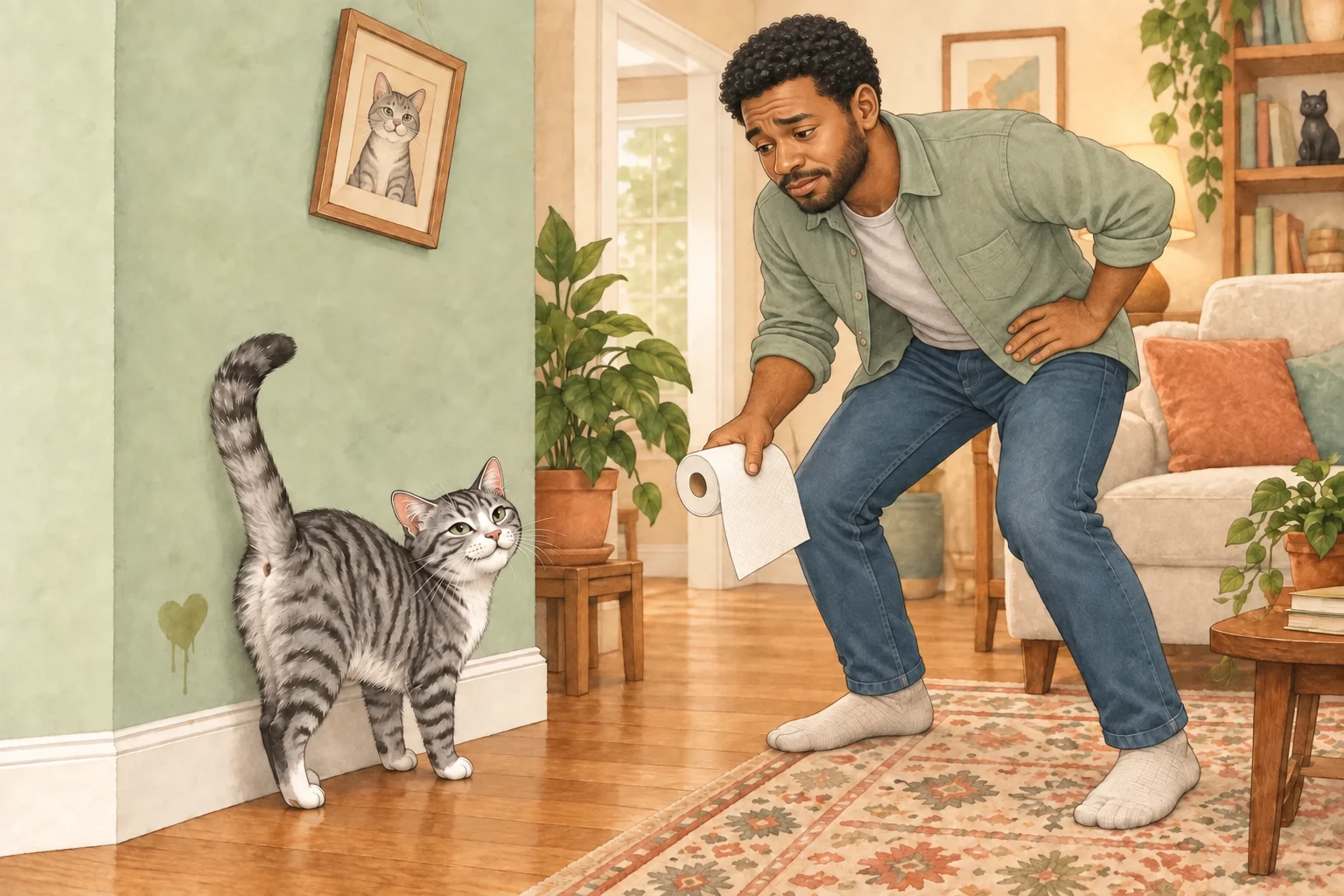
Urine marking
Intact males are more likely to spray vertical surfaces, especially when territory or other cats are nearby.
Roaming
Hormones can increase the drive to escape and travel farther in search of a mate.
Fighting
Competition with other males can lead to bites, abscesses, and exposure to infectious disease.
Unplanned litters
One roaming male can father kittens with multiple unspayed females.
The practical reasons
Why owners discuss it with their veterinarian
Prevent unplanned litters
A male cat can father many kittens. Neutering removes that possibility and contributes to fewer unwanted litters entering shelters or living outdoors.
Remove testicular-cancer risk
Because the testicles are removed, a neutered male cannot develop testicular cancer. Your veterinarian can explain other health considerations for your individual cat.
Reduce hormone-driven behavior
Neutering may reduce urine spraying, roaming, and fighting with other males. It is not a cure for every behavior, especially habits driven by fear, stress, or learning.
Timing
When should it happen?
Veterinary and feline organizations commonly support neutering cats by about five months of age. The safest timing still depends on your kitten’s health and development, so schedule an examination and follow your veterinarian’s recommendation.
A calmer recovery
What your kitten may need afterward
- 01
A warm, quiet indoor space where your kitten can rest safely as anesthesia wears off.
- 02
No rough play, climbing, or outdoor roaming until your veterinary team says normal activity is safe.
- 03
Protection from licking if your veterinarian recommends a recovery collar, plus all prescribed medication exactly as directed.
- 04
Regular checks of the surgery area. Call the clinic for bleeding, discharge, increasing swelling, an open incision, vomiting, unusual lethargy, appetite loss, or anything that worries you.
Sources and further reading
ASPCA: Spay/Neuter Your Pet ↗AVMA: Spaying and Neutering overview ↗