Breed compatibility guide
Ragdoll
The gentle shadow
Affectionate, easygoing, and happiest near their people, Ragdolls suit homes seeking a devoted companion with a comparatively calm rhythm.
Meet the Ragdoll
Origins and everyday rhythm
Two useful pieces of context before you decide whether this breed belongs on your shortlist.
Background
Where the breed comes from
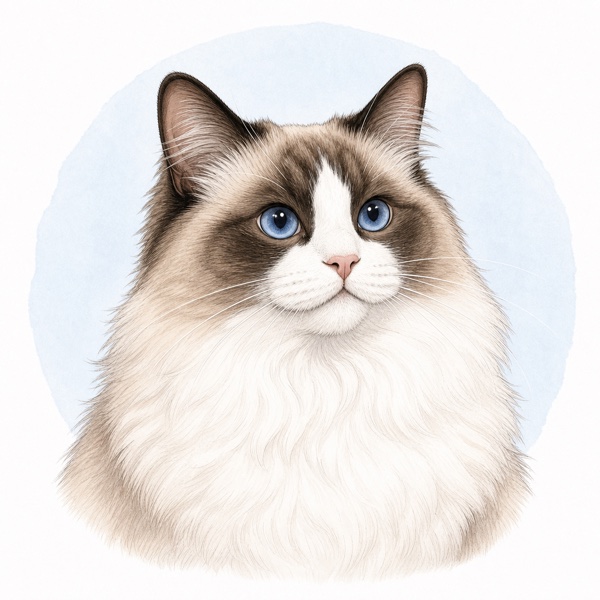
The Ragdoll was developed in California in the 1960s from carefully selected domestic longhaired cats. Modern Ragdolls are large, blue-eyed, pointed cats whose pale bodies contrast with darker faces, ears, legs, and tails. The familiar name describes the relaxed reputation that shaped the breed—not a promise that every Ragdoll enjoys being carried.
Daily life
What the rhythm can feel like
Expect companionship that is usually close and gentle rather than relentlessly busy. Many Ragdolls follow household activity from room to room, enjoy short play sessions, and settle near people afterward. Their trusting style makes respectful handling especially important: children should support the cat’s body and allow the cat to leave rather than treating calmness as unlimited tolerance.
At a glance
What life together may feel like
These are broad breed tendencies, not guarantees about an individual cat. A higher care score means more owner effort; family and other-pet scores assume respectful handling and gradual introductions.
A promising match if
Your home offers…
- You want a physically affectionate companion
- Your home has time for regular coat care
- A gentle family cat suits your routine
Think carefully if
Your routine needs…
- They may dislike long periods without company
- Their semi-long coat needs consistent combing
Sources and standards
Built from registry guidance, then translated for home life
We compare breed-registry descriptions with practical questions about activity, grooming, social needs, and household setup. Profiles describe broad tendencies, not medical advice or a guarantee about an individual cat.
Cat Fanciers’ Association breed library ↗TICA breed library ↗Catbreed editorial methodology →
Breed-specific setup planner
What to evaluate before buying for a Ragdoll
Catbreed maps each category to the activity, learning, and grooming scores in the profile above. We do not copy merchant descriptions or label an individual product “best” without hands-on testing. The links open broad Amazon searches so you can compare dimensions, materials, safety features, recent reviews, and current prices yourself.
Affiliate disclosure: As an Amazon Associate I earn from qualifying purchases. This does not change the price you pay. You can also use the criteria below at a local pet store, another retailer, or with secondhand equipment that can be cleaned and inspected safely.

Category guide
Secure window perch
- Why it fits
- A calmer Ragdoll can gain everyday variety from a comfortable observation point without demanding more floor space.
- What to inspect
- A mounting system suited to your window, a washable cover, enough body support, and a capacity above your cat’s weight.
- Skip or avoid
- A perch that shifts under pressure or blocks the cat’s only easy exit route.

Category guide
Supervised wand toy
- Why it fits
- Short hunting-style sessions give a Ragdoll exercise and shared attention without requiring constant high-intensity activity.
- What to inspect
- A comfortable handle, enough distance from claws, replaceable attachments, and movement your cat can safely catch.
- Skip or avoid
- Leaving string, wire, feathers, or small attachments accessible when nobody is supervising.

Category guide
Rounded-tooth grooming comb
- Why it fits
- The Ragdoll coat needs consistent hands-on maintenance, especially in friction areas where tangles can become painful.
- What to inspect
- Smooth rounded teeth, comfortable spacing for the coat, a secure grip, and a size that reaches the armpits and hindquarters gently.
- Skip or avoid
- Cutting blades or aggressive dematting tools unless a groomer or veterinarian has shown you how to use them safely.
Prices, availability, and listing quality change frequently. Confirm measurements against your cat and home, supervise new equipment, and ask your veterinarian or groomer when health, mobility, skin, or coat needs affect the choice.