Breed compatibility guide
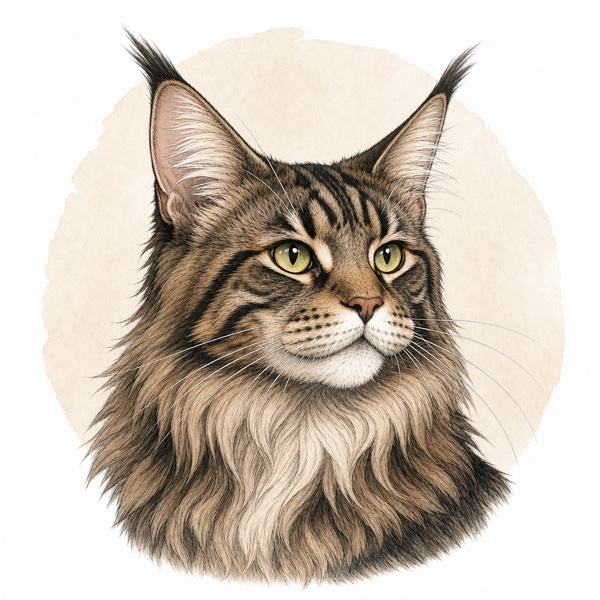
Maine Coon
The sociable explorer
Friendly, playful, and famously good-natured, Maine Coons combine an impressive presence with an adaptable, interactive personality.
Meet the Maine Coon
Origins and everyday rhythm
Two useful pieces of context before you decide whether this breed belongs on your shortlist.
Background
Where the breed comes from
The Maine Coon developed as a North American natural breed and became known for a weather-resistant coat, tufted furnishings, and a substantial frame. Its exact early origin is wrapped in folklore, so responsible histories separate colorful stories from what is documented: these cats were established in the northeastern United States and appeared in early American cat shows.
Daily life
What the rhythm can feel like
A Maine Coon often brings steady sociability with more motion than its relaxed expression suggests. Many enjoy climbing, following people, carrying toys, and participating without demanding a lap. Their size changes the practical setup: narrow shelves, small litter boxes, and lightweight scratchers may work for a kitten but become frustrating or unsafe for an adult.
At a glance
What life together may feel like
These are broad breed tendencies, not guarantees about an individual cat. A higher care score means more owner effort; family and other-pet scores assume respectful handling and gradual introductions.
A promising match if
Your home offers…
- You enjoy playful, involved cats
- Children or friendly pets share the home
- You can provide sturdy climbing furniture
Think carefully if
Your routine needs…
- Large bodies need appropriately sized equipment
- Their coat calls for frequent grooming
Sources and standards
Built from registry guidance, then translated for home life
We compare breed-registry descriptions with practical questions about activity, grooming, social needs, and household setup. Profiles describe broad tendencies, not medical advice or a guarantee about an individual cat.
Cat Fanciers’ Association breed library ↗TICA breed library ↗Catbreed editorial methodology →
Breed-specific setup planner
What to evaluate before buying for a Maine Coon
Catbreed maps each category to the activity, learning, and grooming scores in the profile above. We do not copy merchant descriptions or label an individual product “best” without hands-on testing. The links open broad Amazon searches so you can compare dimensions, materials, safety features, recent reviews, and current prices yourself.
Affiliate disclosure: As an Amazon Associate I earn from qualifying purchases. This does not change the price you pay. You can also use the criteria below at a local pet store, another retailer, or with secondhand equipment that can be cleaned and inspected safely.

Category guide
Sturdy cat tree
- Why it fits
- A Maine Coon with an active profile benefits from legal height, climbing routes, and elevated rest.
- What to inspect
- A broad base, anti-tip anchor, usable platform sizes, replaceable scratching surfaces, and a stated weight capacity.
- Skip or avoid
- Narrow towers that wobble during a jump or leave a large adult with no safe way down.

Category guide
Adjustable puzzle feeder
- Why it fits
- The Maine Coon profile suggests strong interest in learning, problem solving, and food-based games.
- What to inspect
- Food-safe materials, several difficulty levels, rounded openings, stable footing, and parts that separate for washing.
- Skip or avoid
- Tiny removable pieces, sharp edges, or a puzzle so difficult that the cat gives up instead of learning.

Category guide
Rounded-tooth grooming comb
- Why it fits
- The Maine Coon coat needs consistent hands-on maintenance, especially in friction areas where tangles can become painful.
- What to inspect
- Smooth rounded teeth, comfortable spacing for the coat, a secure grip, and a size that reaches the armpits and hindquarters gently.
- Skip or avoid
- Cutting blades or aggressive dematting tools unless a groomer or veterinarian has shown you how to use them safely.
Prices, availability, and listing quality change frequently. Confirm measurements against your cat and home, supervise new equipment, and ask your veterinarian or groomer when health, mobility, skin, or coat needs affect the choice.